
Our first stop was the Wroclaw Glówny train station, where we met up with Hubert’s cousin and his wife, our travel companions for this mini getaway. The train station itself is quite beautiful, built in the neo-gothic style and painted bright yellow, it stands out as an attraction all on its own.
From there, we headed straight to the Raclawice Panorama, one of the city’s most famous attractions. The painting, a staggering 15 by 114 metres, depicts the 1794 Battle of Raclawice and wraps entirely around you in a specially designed rotunda. Standing in the middle of the circular gallery, surrounded by vivid battle scenes and a softly narrated audio guide, it’s easy to forget where the art ends and reality begins. It’s an extraordinary blend of history and illusion.
From the Panorama, we strolled toward Ostrów Tumski, also known as Cathedral Island. It is the oldest part of the city and is filled with medieval churches, cobblestone lanes, and historic gas lamps which are lit by an elusive lamplighter each evening. We popped into a few of the cathedrals to admire the beautiful interiors before wandering along the Oder River.
The city has a fairytale feel with its gothic architecture, and brightly coloured buildings, church spires towering in the skyline, and reflected in the water that flows gently between the islands. In addition, Wroclaw is home to hundreds of bronze dwarf statues that add a touch of whimsy to the city. Dwarf spotting it a popular tourist activity and adds a great deal of fun to a visit.
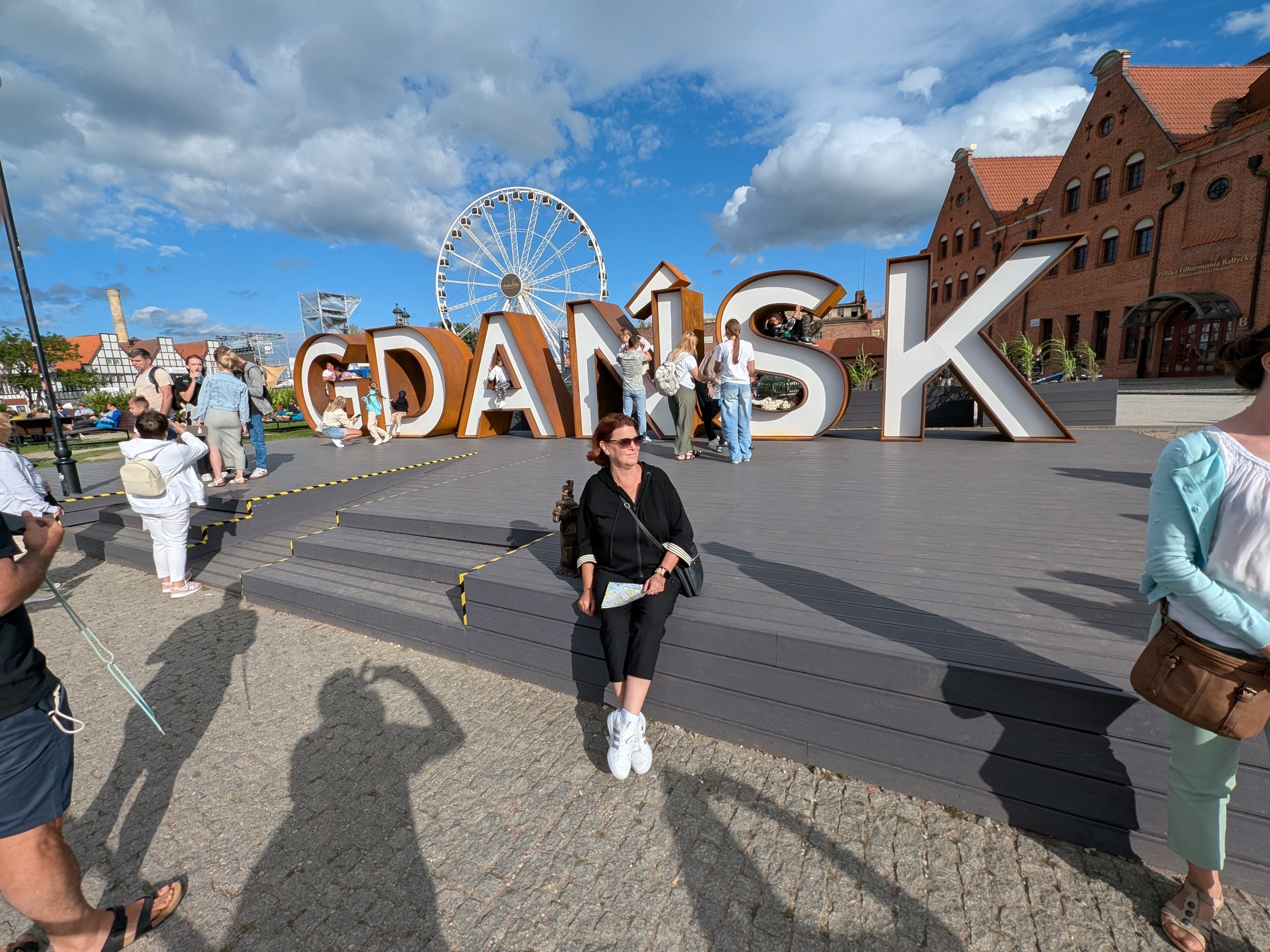
Lunch that day was at Stary Klasztor which translates to Old Monastery. The gothic interior features stained glass windows and lots of music memorabilia, but I was more taken with the walls of books and old typewriters on display, which made this writer feel right (write) at home. The food was great too. My pierogi were perfect—soft, buttery, and thankfully served with sour cream (unlike my Gdansk experience!).
After lunch, we checked into our apartment, located about 1.5 kilometres from the old town. It was spacious and comfortable, with separate bedrooms and two shower rooms—a welcome luxury for a group trip. A short nap later, we were ready to explore again.
As evening fell, we made our way to Wroclaw’s Market Square (Rynek), one of the most beautiful in Europe. The pastel facades glowed in the golden light, and the atmosphere buzzed with musicians, diners, and people from all walks of life. We eventually settled at Piwnica Swidnicka, which has existed since 1273, and is the oldest in Europe. We sat on the patio and took in the sights and sounds of the square at night. Since it is also a brewery, we decided to try a beer tasting flight with our meals. I really enjoyed sampling the beers as each was unique and very different from anything I’ve tried before.
The next morning, we had breakfast at the Book Café—partly because it was so close to our AirBnB, but mostly because we loved the cozy atmosphere of being surrounded by books. Our first stop of the day was the University of Wroclaw Museum, which offers several ticket options depending on how many rooms you wish to see. We opted for the full experience, which included the Mathematical Tower, where the views over Wroclaw’s rooftops were spectacular. Inside, the exhibits showcased rare books, early teaching materials, and scientific instruments from the 18th century.
The real highlight, however, was the Aula Leopoldina, the university’s baroque assembly hall. Its painted ceiling, gilded sculptures, and ornate carvings rival those of Italian churches. Standing beneath it, I was completely awestruck. The vibrant colours, the intricate details of the paintings and the ornate gold filigree carvings are magnificent examples of baroque art and architecture. It is truly worth making time to visit this incredible masterpiece.
From there, we continued along the riverside, ducking into a few smaller churches and stopping at Piast Castle. Beneath the museum lie the remains of a 10th-century wooden fort that later grew into a stone castle during the 12th and 13th centuries. Much of that work is linked to Duke Henryk I and his wife, St. Jadwiga of Silesia—which felt especially meaningful to us, since Hubert’s mom was also named Jadwiga.
The museum features a small café situated on a beautiful garden courtyard. We stopped here for a cold drink and a sweet treat. The courtyard was quiet and lovely, and my lavender lemonade—made with lavender grown right there—was one of the trip’s small delights.
Our next stop was the University Botanical Garden, an oasis of flowers and greenery tucked just beyond the city centre. It was a hot summer afternoon, so our pace was more brisk than leisurely, but even at a clip, the gardens were beautiful.
Later, we took a river boat tour to see Wroclaw from a different perspective. The city’s many bridges and islands make it a joy to explore by water, and it was the perfect way to rest our feet while taking in the views. As evening approached, we wandered back to the Market Square for dinner at Zloty Pies (Golden Dog), then made a quick stop at Zabka for snacks and drinks before turning in for the night.
On our final day, we visited the National Museum in Wroclaw, which is conveniently included in the Panorama ticket. The collection features Polish art and religious artifacts spanning centuries. While it was certainly interesting, I’ll admit I would have preferred one more stroll through the old city instead—but travel is all about compromise, especially when you’re with family.
Before leaving town, we made one last stop at the Herbaciarnia Targowa, a hidden tea room inside the Hala Targowa (Market Hall). It was the perfect way to end our visit—quiet, a little nostalgic, and distinctly Wroclaw.
Each Polish city we’ve visited has had its own personality, but Wroclaw’s combination of art, history, and warmth made it feel special. I understand why my son spoke so fondly of it and I hope to return someday to spend more time this charming city.


Leave a Reply